Overview
Pesawise is a Kenyan fintech startup building smarter cross-border payment experiences for individuals and SMEs. I led a full redesign of their website — sharpening the brand identity, speaking more directly to a younger, tech-savvy audience, and filling critical gaps with new pages for Products, Company, and Developers. Every decision was grounded in user research and aligned closely with business goals.
KEY PROBLEM SOLVED
Visitors couldn't understand what Pesawise was, or why they should trust it
The existing website wasn't doing the product justice. Visitors couldn't quickly grasp what Pesawise does, the interface felt outdated, and the brand failed to project the trust and professionalism that fintech users expect. The site was losing people before they ever explored the product.
The problem was not a lack of product capability. Pesawise already offered cross-border transfers, mobile money integration, a developer API, and SME accounts. The gap was the website itself — there was no clear path for a first-time visitor to go from landing on the homepage to understanding what Pesawise is, who it's for, and why it's worth trusting with their money.
Beyond the homepage, there were structural gaps in the site architecture. There were no dedicated pages for Products, Company, or Developers — meaning technical users, prospective partners, and first-time visitors were all landing in the same place with no clear path forward. The design challenge was to close those gaps while building a site that could finally match the quality of the product behind it.
WHAT I DESIGNED
Landing Page
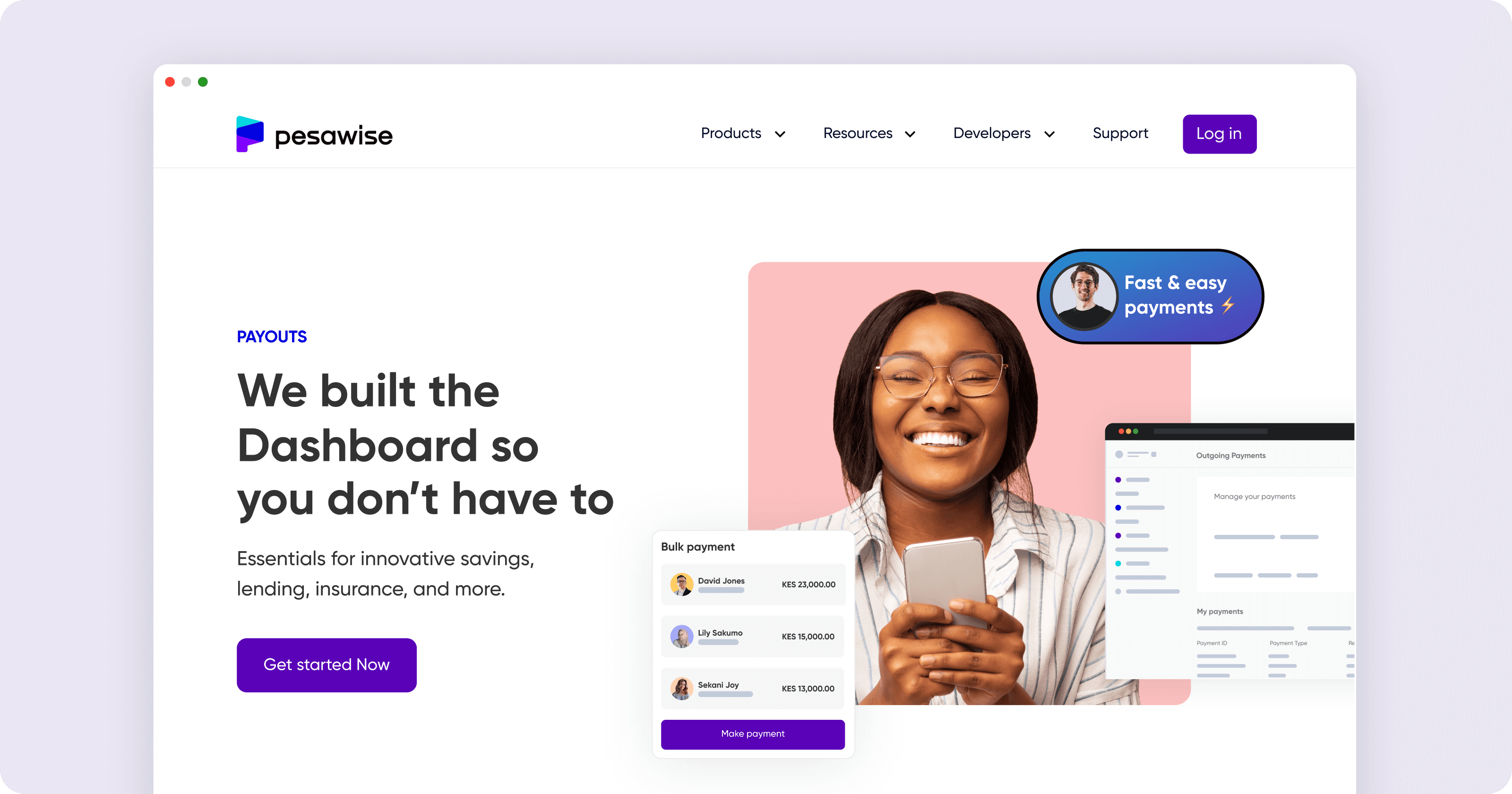
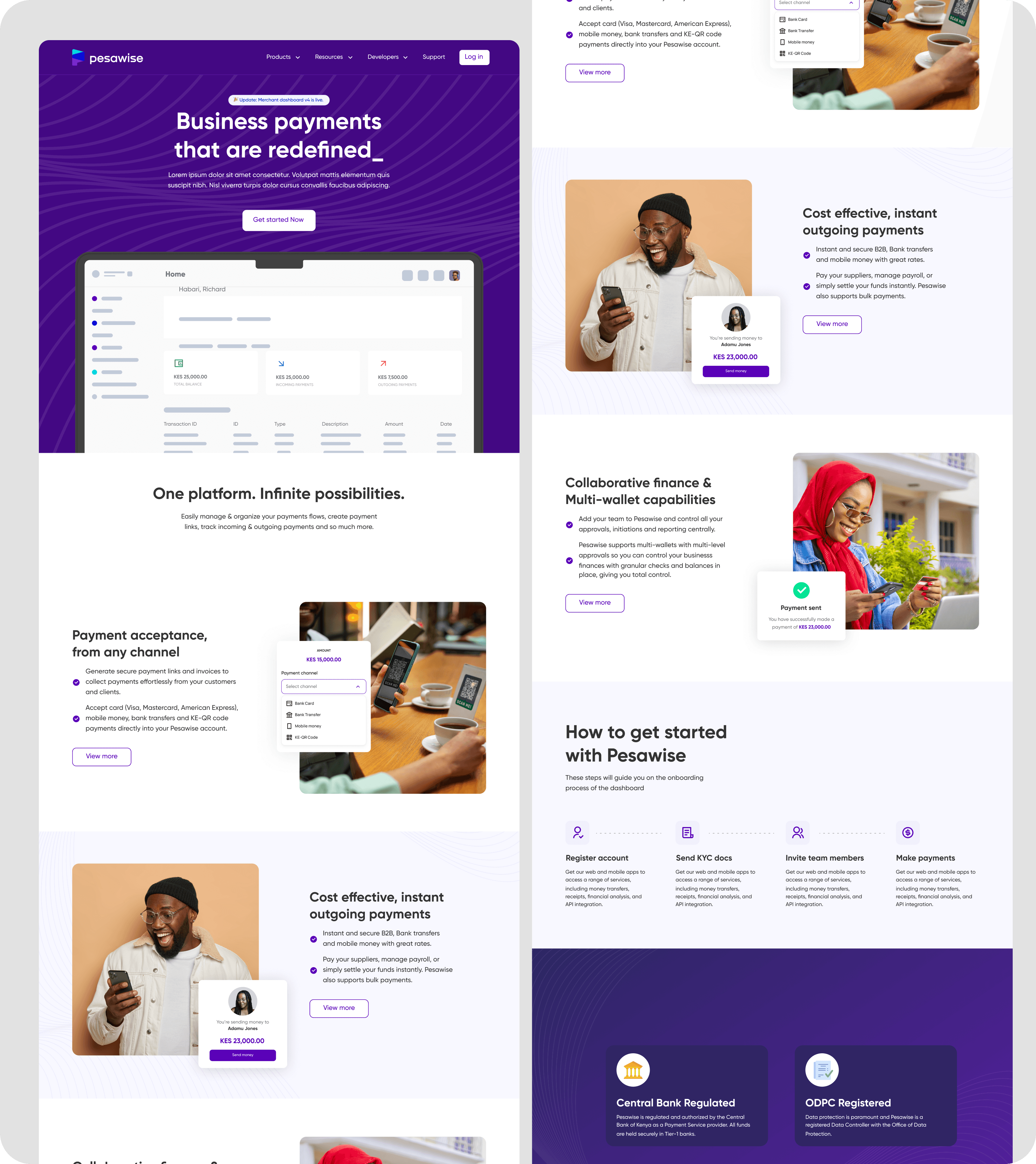
The homepage was rebuilt around a single goal: make Pesawise immediately understood. The hero leads with a direct headline and a short supporting line, followed by two clear calls to action — one for individuals looking to open an account, one for developers exploring the API. Trust signals were placed directly below the fold, surfacing licensing, security standards, and supported currencies without requiring users to go looking for them.
Navigation was simplified into four clear sections — Products, Company, Developers, and Pricing — with a persistent CTA in the header across all pages. Below the hero, features are organised into clearly separated sections, each with a focused heading, supporting copy, and relevant visuals rather than a single wall of content.
Product pages
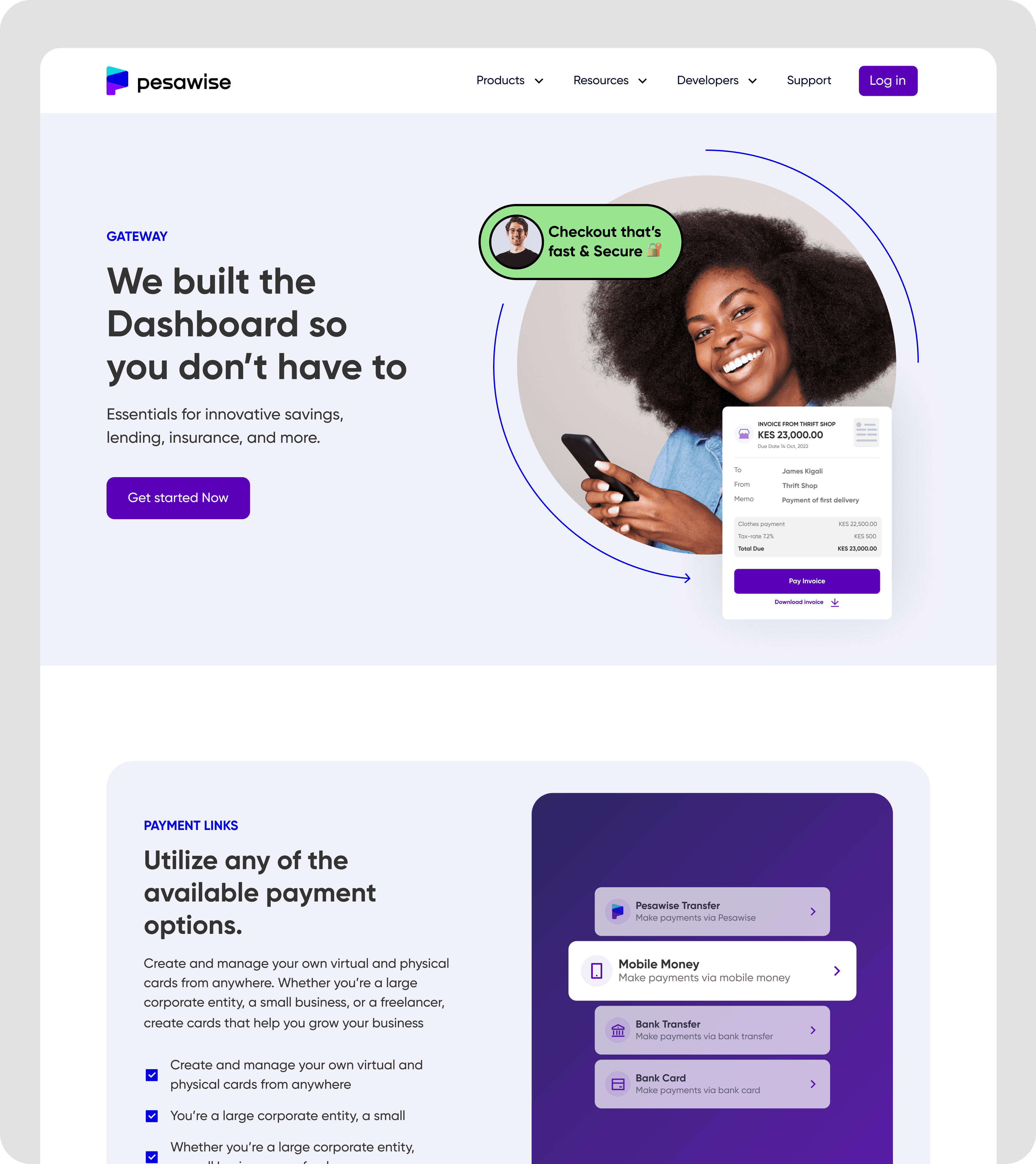
Each product — Gateway, Send, Mobile Money, and SME — received a dedicated page built around a consistent structure: a hero with a specific headline and product visual, a feature breakdown with supporting icons, a benefits section, partner logos, and a review strip. The hero was designed so that a user landing directly on it — from search, a referral link, or the navigation — would immediately understand what that product does and who it is for.
Interactive elements including tabs, accordions, and hover states were introduced to let users navigate product detail without being overwhelmed by it. Brand colours were applied with more restraint than the original site, creating visual hierarchy without visual noise. Copy was reviewed with the marketing team at each stage to ensure the language was aligned with conversion goals and user needs.
Gateway product page
New pages — Company, Products and Developers
Three pages that did not previously exist were designed from scratch. The Company page gave Pesawise a place to tell its story — mission, team, and the markets it serves — providing partners and prospective hires the context they needed. The Products overview page became the central hub linking all individual product pages, improving discoverability and internal navigation for users who arrived without a specific product in mind.
The Developers page was designed primarily for technical users, surfacing API documentation entry points, code examples, and a pathway to the sandbox environment. The goal was to let engineers go from discovery to a working integration without needing to contact sales or wait for a demo call first.
Prototype
IMPACT
RELECTION
Redesigning a website for a fintech brand means designing for trust as much as clarity. A clean layout and sharp copy matter, but so does every small decision — whether the brand colours feel considered, whether the navigation assumes too much of the user, whether a first-time visitor from Nigeria or Ghana feels as addressed as one from Nairobi. Working closely with the sales and marketing team helped keep those questions live throughout the process rather than settling them at the brief stage and moving on.
If I were to extend this project, I would focus on the Developers section — building out proper documentation patterns, interactive code examples, and a self-serve path that lets technical users go from discovery to a working integration without leaving the site or contacting anyone. That is the part of the experience most likely to determine whether Pesawise becomes an infrastructure choice, not just a payments option.